Steve Overend, 66 from Runcorn, was diagnosed with cancer of the salivary glands in August 2020.
Steve’s diagnosis was most likely the result of contracting human papillomavirus, more commonly known as HPV.
On International HPV Awareness Day, Steve is sharing his story to raise awareness of the dangers of the infection and how he has recovered following his cancer diagnosis and treatment.
HPV is a common virus that many people contract during their lifetime and have no symptoms. But on rare occasions, the virus can be linked to cancer in particular cervical cancer, anal cancer and head and neck cancer, as in Steve’s case. The best way to prevent infection of HPV is through a simple vaccine.
“Four years ago, I developed a swelling on the inside of my mouth” explains Steve. “It got so bad, I was struggling to swallow. I saw a dentist who initially thought I might have an abscess. But when antibiotics didn’t work to shrink the swelling, I started having further tests.”
Steve was diagnosed with squamous cell carcinoma – a very rare type of salivary gland cancer. Squamous cell carcinoma is more usually associated with skin cancer. This cancer is more likely to develop later in life and is usually a fast growing cancer.
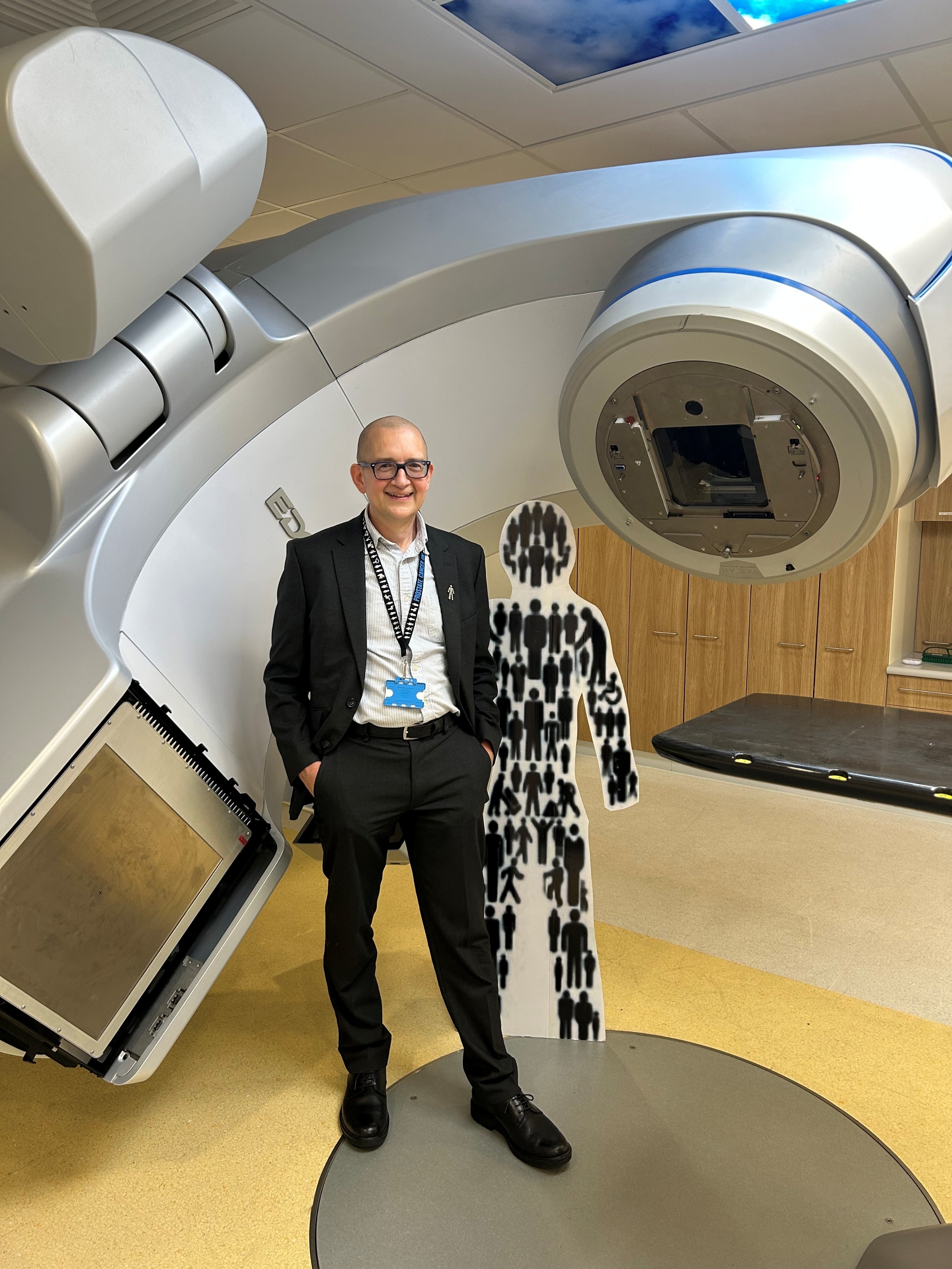
Steve was referred to The Clatterbridge Cancer Centre where he began treatment including 35 sessions of radiotherapy and 3 chemotherapy sessions.
Following intense treatment by The Clatterbridge Cancer Centre NHS Foundation Trust, Steve has been cancer free since July 2021 and is adapting to new ways of life including eating an almost exclusively liquid diet.
“The cancer and subsequent treatment has severely affected my ability to swallow” says Steve. “I couldn’t produce saliva properly so eating drier foods was impossible and any liquid kept going down the wrong way because I couldn’t swallow properly.
Steve needed support from The Clatterbridge Cancer Centre’s Speech and Language Therapists (SALT). “Whilst I was using a feeding tube to help me get the nutrition I needed, I worked with the SALT Team to improve my swallow. They were amazing, working with me to improve my techniques, getting me x-rays to work out exactly what was going wrong and getting other support when I needed it. It’s because of the team, I no longer need a feeding tube.”
Whilst Steve is no longer using a tube to get his food, he can only eat very soft or liquidised foods such as soup, mousse or cream.
Dr Caroline Brammer, Medical Director and Consultant in Clinical Oncology at The Clatterbridge Cancer Centre was part of the team leading Steve’s care. As Steve is a non-smoker and only a casual drinker, Dr Brammer believes Steve’s cancer was most likely caused by HPV. She says: “It’s not known how many of us carry HPV, but we have all probably been exposed to it as some point in our lives.
“The difference between those of who develop tonsil cancer – the most common head and neck cancer we see in clinic – and those who don’t is still a subject of research.”
“Thankfully, tumours driven by HPV are very sensitive to chemotherapy and radiotherapy, even when advanced” adds Dr Brammer. “This wasn’t the case with the majority of head and neck cancer 30 years ago, which were more commonly caused by smoking, heavy drinking or both.”