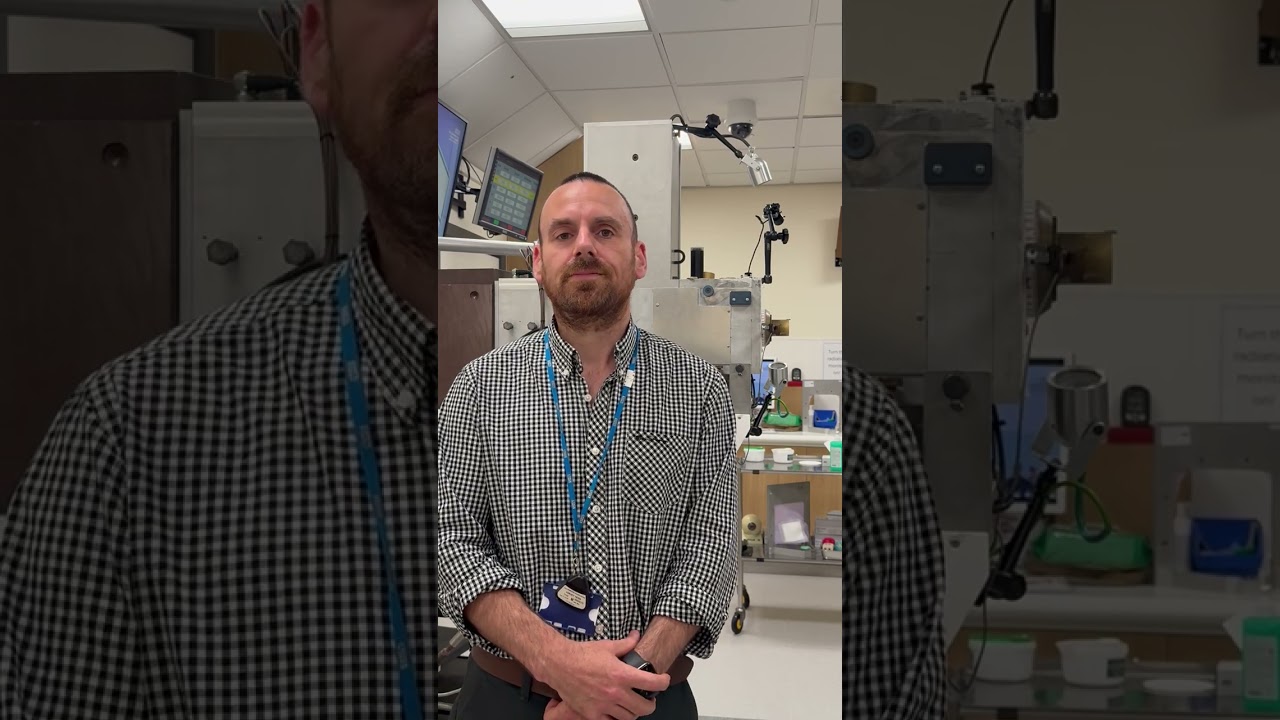
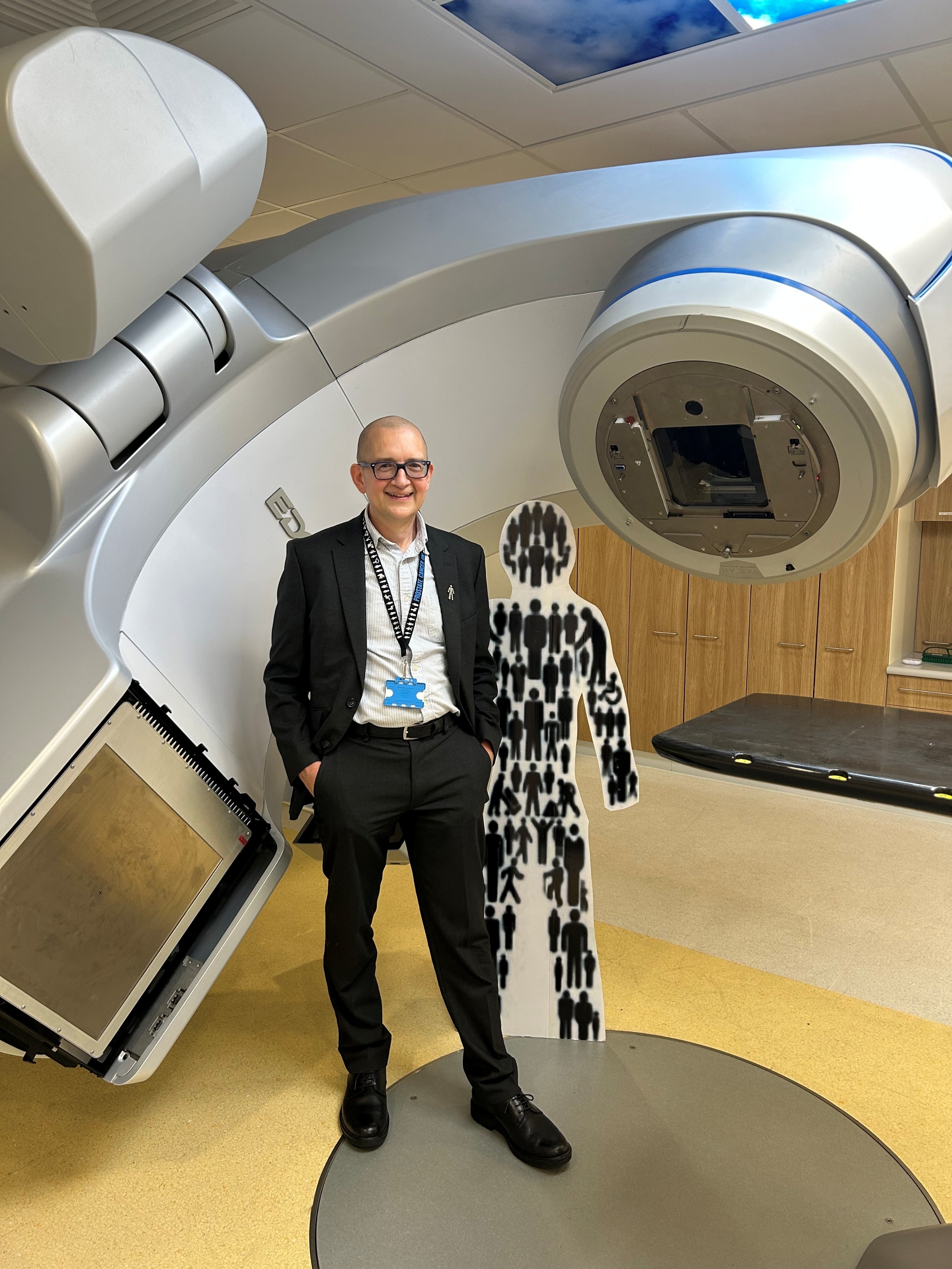
A team from The Clatterbridge Cancer Centre have used their ingenuity and expertise to develop a new dose monitoring system for the UK’s national eye proton therapy service, with funding from NHS England. The new system is highly optimised for use in low-energy proton therapy and paves the way for other countries to follow suit.
Eye proton therapy is so highly-specialist that there are just a handful of services worldwide and there are no commercial manufacturers for low-energy proton machines. Any new kit or replacement parts have to be designed and developed in-house by the expert engineers and clinical scientists at The Clatterbridge Cancer Centre.
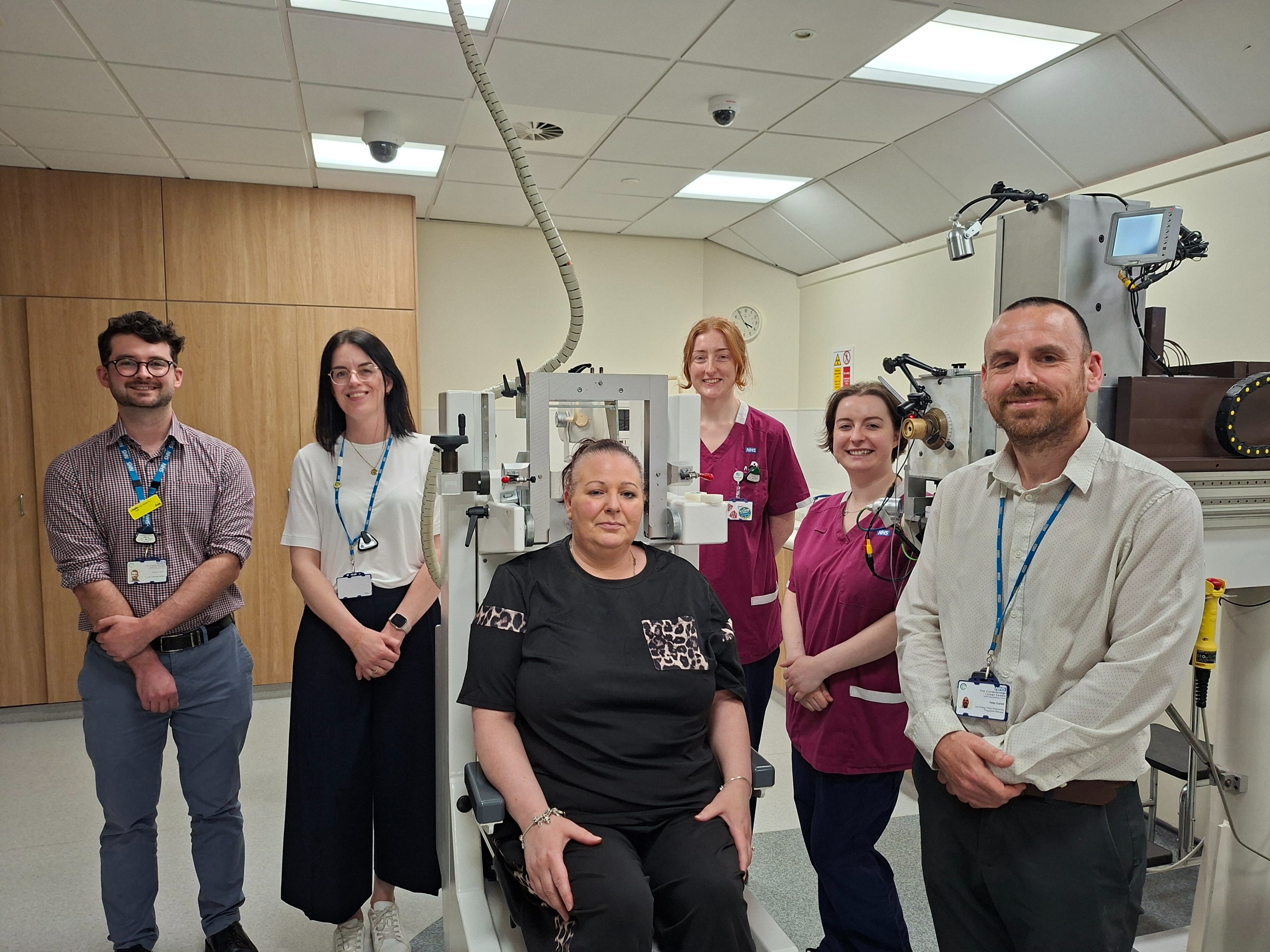
The treatment uses low-energy proton beams to very precisely target cancers of the eye such as uveal melanomas, helping patients avoid surgery to remove their eye.
Unlike traditional radiotherapy, which uses intense X-ray beams, proton beam therapy is particularly well suited for treating areas such as the eye because the energy is deposited at a precise depth in the body and then stops. This protects the surrounding tissue such as the optic nerve and brain from exposure to radiation.
The dose monitoring system is a crucial element of the proton therapy system. Ion chambers placed within the treatment beamline measure the intensity and position of proton radiation being delivered to the patient. Specialist electronic devices then calculate the dose being delivered thousands of times per second and shut the beam off as soon as the correct dose has been administered, all coordinated via an industrial computer.
Creating the new system has involved several years of hard work and has been a labour of love for The Clatterbridge Cancer Centre’s specialist team of engineers and clinical scientists. It began back in 2022 when they identified that parts of the treatment machine would need replacing in the next five years – but there were no commercial manufacturers or suppliers who could provide a turnkey system off the shelf.
With funding from NHS England, they worked with Pyramid Technical Consultants (a supplier of component parts for proton therapy machines) to design and build a bespoke system matched to The Clatterbridge Cancer Centre’s cyclotron.
Pyramid provided ionisation chambers and dose counting electronics. The ionisation chambers were designed and built specifically to fit seamlessly into the existing Clatterbridge beamline. They have also added the capability to monitor the symmetry of the proton beam.
The Clatterbridge Cancer Centre provided the computer which coordinates the system, and integrating the component parts together. The software for the computer system had to be specially developed by the hospital’s Lead Engineer and his team.
The development phase of the project took one year. Calibrating, testing and validating the new equipment to ensure it met the rigorous standards required for UK medical devices took a further year. Beam tests were carried out in two stages – the first involved measurements to assess the new system under clinical conditions; the second involved independent validation and staff training. Both phases were carefully planned to minimise any disruption to patient care.
Experts from the National Physical Laboratory were involved and independently validated the new system’s dose accuracy and distribution.
In 1989, The Clatterbridge Cancer Centre became the first hospital in the world to introduce proton beam therapy for cancer. As the national eye proton therapy service, patients are referred there from all parts of the UK and Ireland via the specialist eye oncology centres in Glasgow, Liverpool, London, Sheffield and Dublin. (Irish patients are funded by their health system.)
The National Eye Proton Therapy Centre at The Clatterbridge Cancer Centre treated 306 patients in 2025. In total, more than 5,400 patients have been treated there over the last 37 years.
Lydia Harrison, from Clacton-on-Sea in Essex, was one of the first patients to be treated since the new dose monitoring system went live. She was referred from Moorfields Eye Hospital after being diagnosed with a melanoma behind her eye.
Lydia said:
I was offered the choice between eye proton therapy or joining a clinical trial of injections for several months. I wanted proton therapy as it was going to be quicker and easier – once a day for four days. The treatment doesn’t take long and, although I was a bit nervous beforehand, you just see a quick flash of light and then it’s done.
Peter Corlett, Lead Engineer at The Clatterbridge Cancer Centre, said:
Building the dose monitoring system has been a huge team effort from a wide range of different roles within The Clatterbridge Cancer Centre and with our commercial partner, Pyramid Technical Consultants, who have supported us superbly.
We have all learned a great deal about how to build and optimise systems such as this, and navigating the regulatory requirements for developing a medical device has been a great learning experience.
It is incredibly rewarding to know that the work we have done contributes towards maintaining the eye proton therapy service for many years to come, ensuring our patients receive the highest quality treatment possible.
Linda Mortimer, Principal Clinical Scientist at The Clatterbridge Cancer Centre, said:
We are extremely grateful to the National Physical Laboratory team for their contributions in verifying dose accuracy and distribution with the new system through site visits, comprehensive measurements, and detailed audit reports.
Laura Howard, Higher Principal Clinical Scientist at The Clatterbridge Cancer Centre, added:
The additional beam monitoring functions on the new dose monitoring controller allow us to prepare the beam more efficiently for patient treatment and ensure accurate treatment delivery.